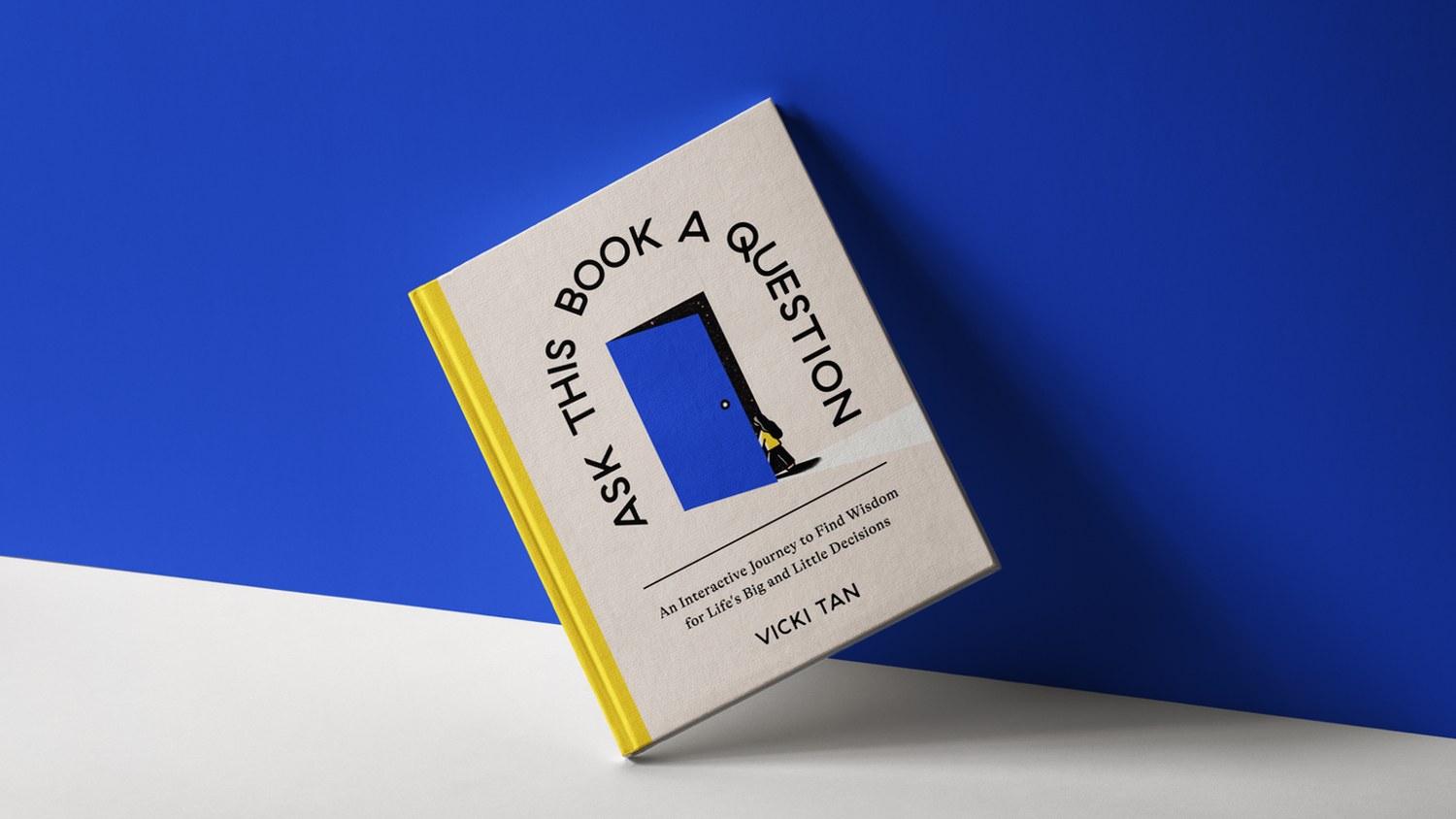
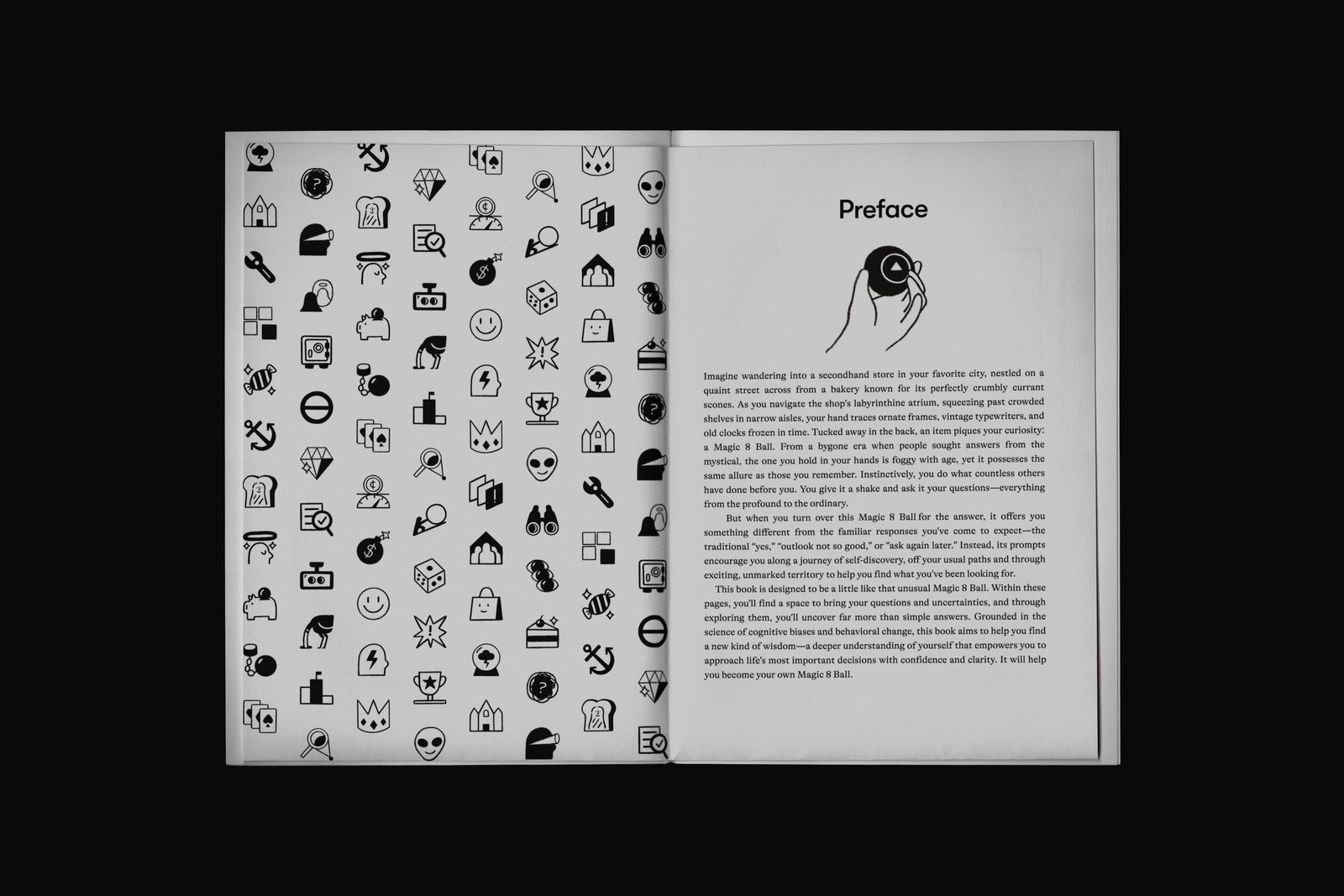
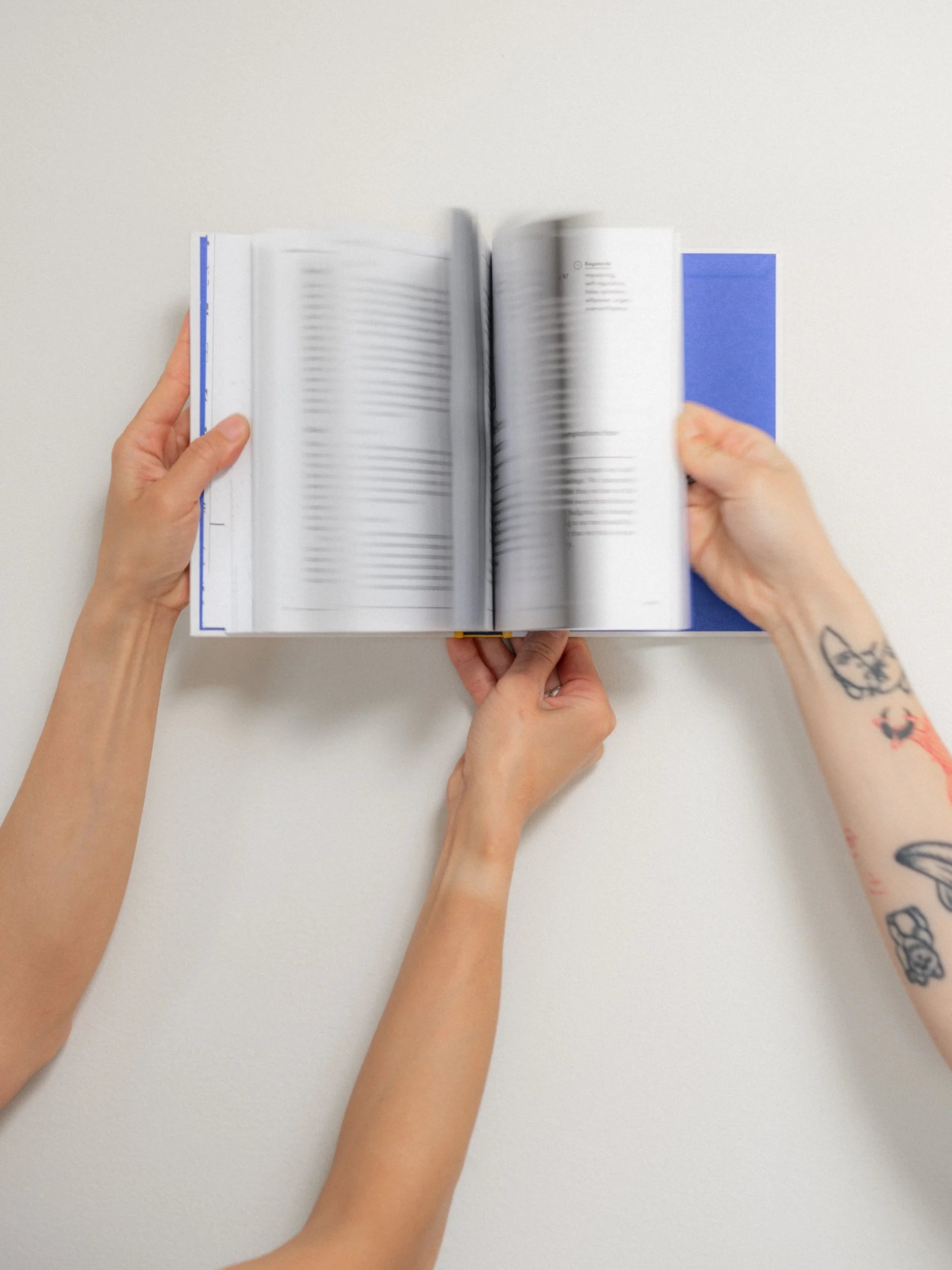
Book spread: the Preface, with an illustration of a hand holding a Magic 8 Ball
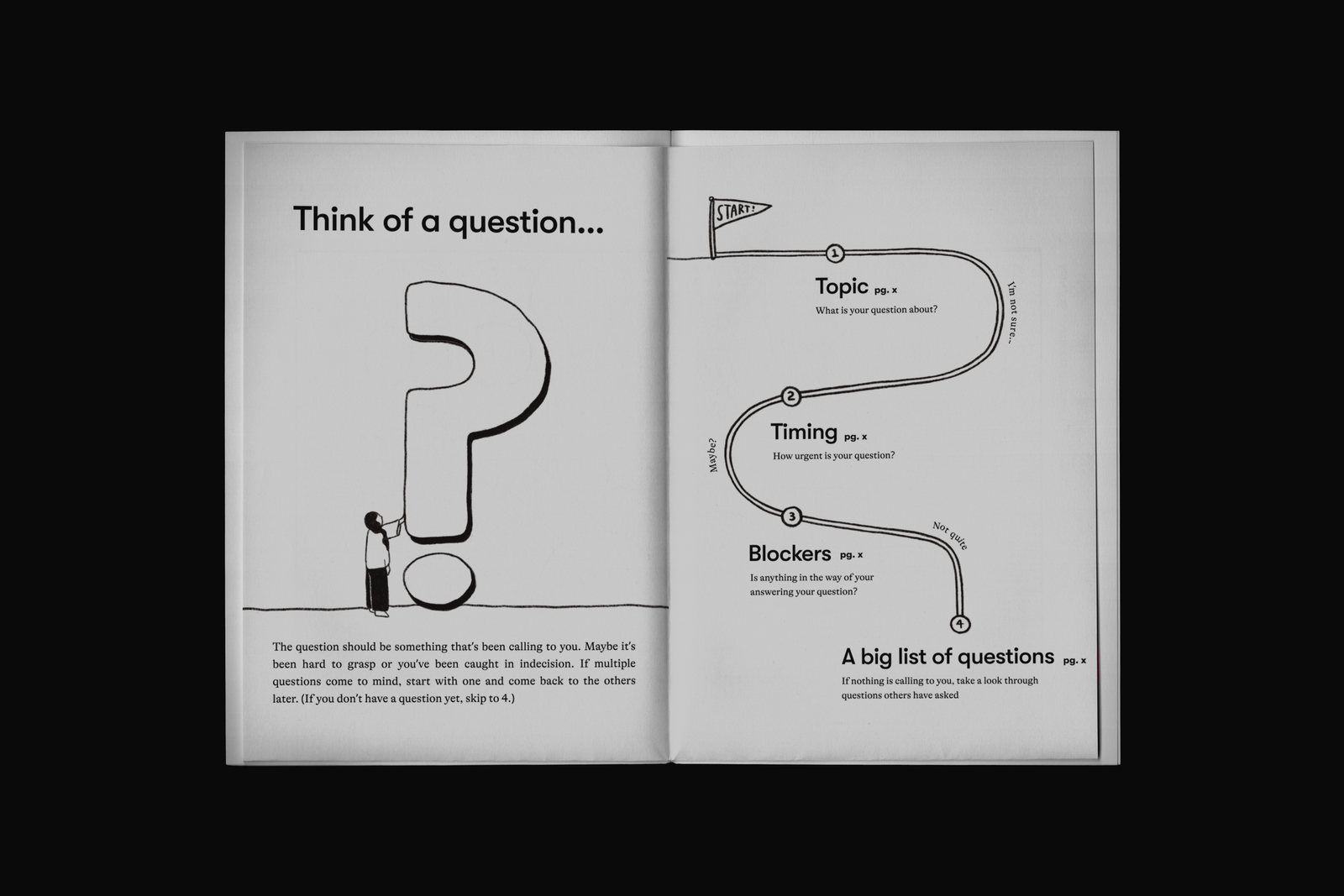
Book spread: “Think of a question,” a winding path through Topic, Timing, Blockers and a big list of questions
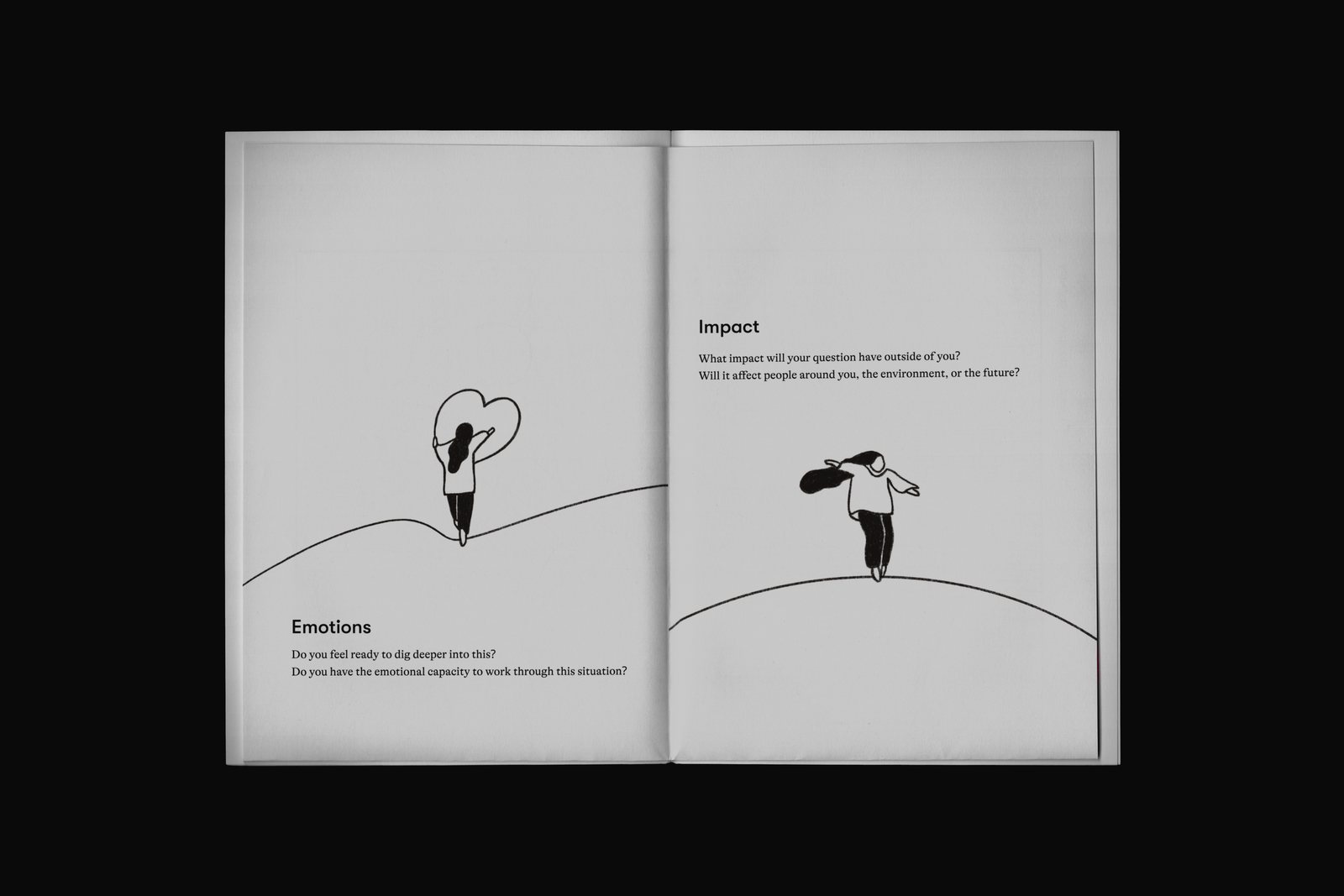
Book spread: the Emotions and Impact pages, two figures walking over hills
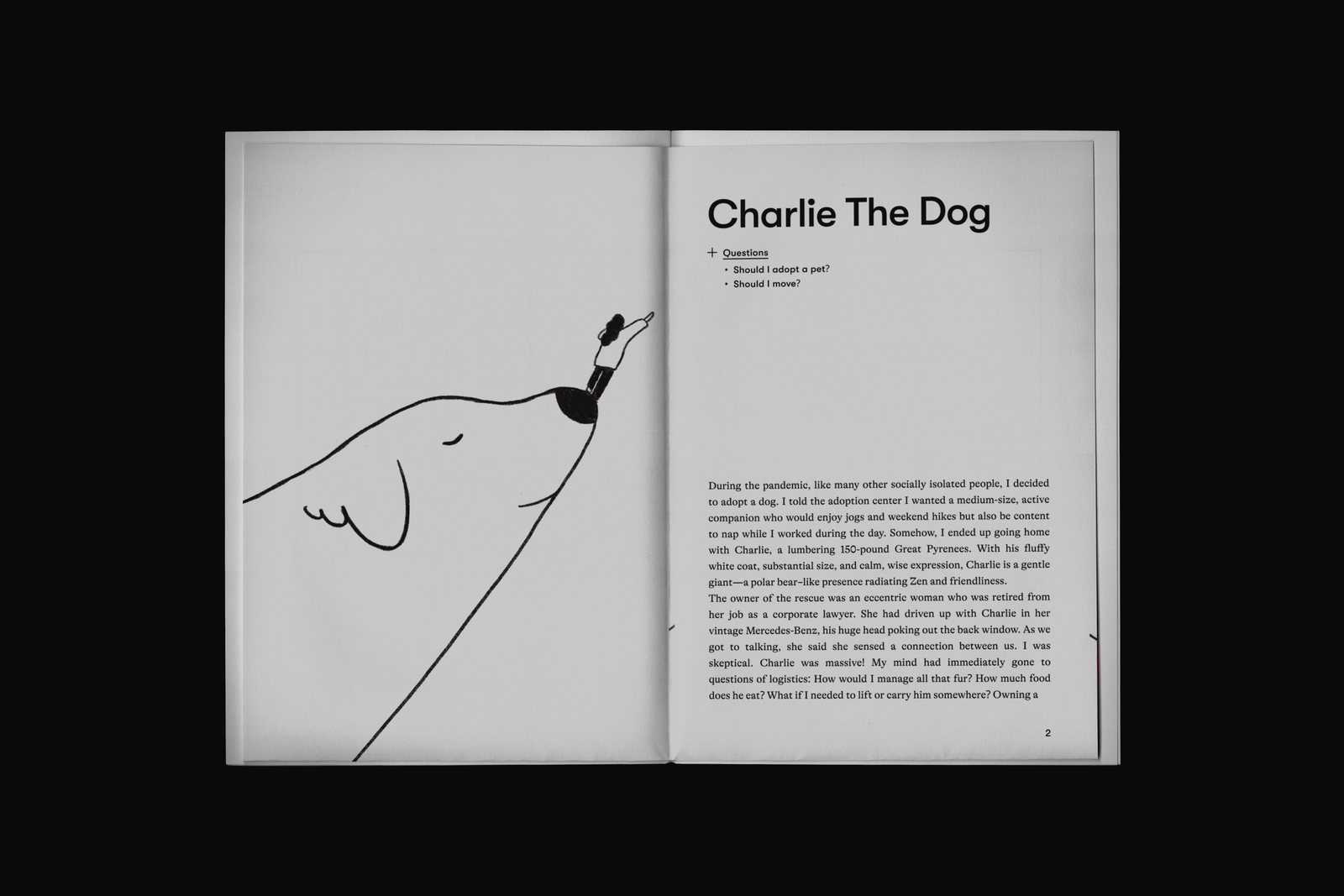
Book spread: the story “Charlie The Dog,” for the questions Should I adopt a pet? and Should I move?
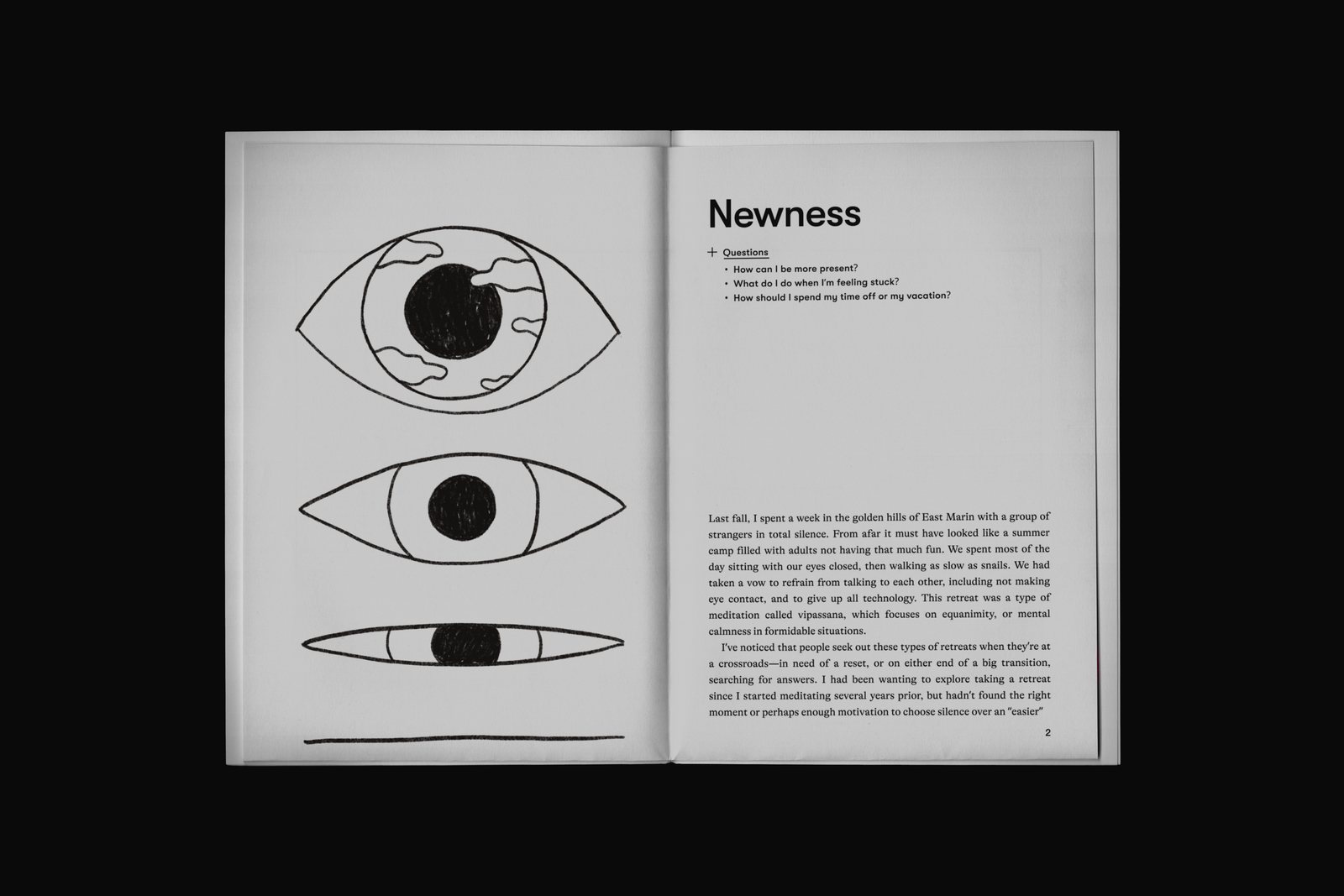
Book spread: the story “Newness,” for questions like What do I do when I’m feeling stuck?
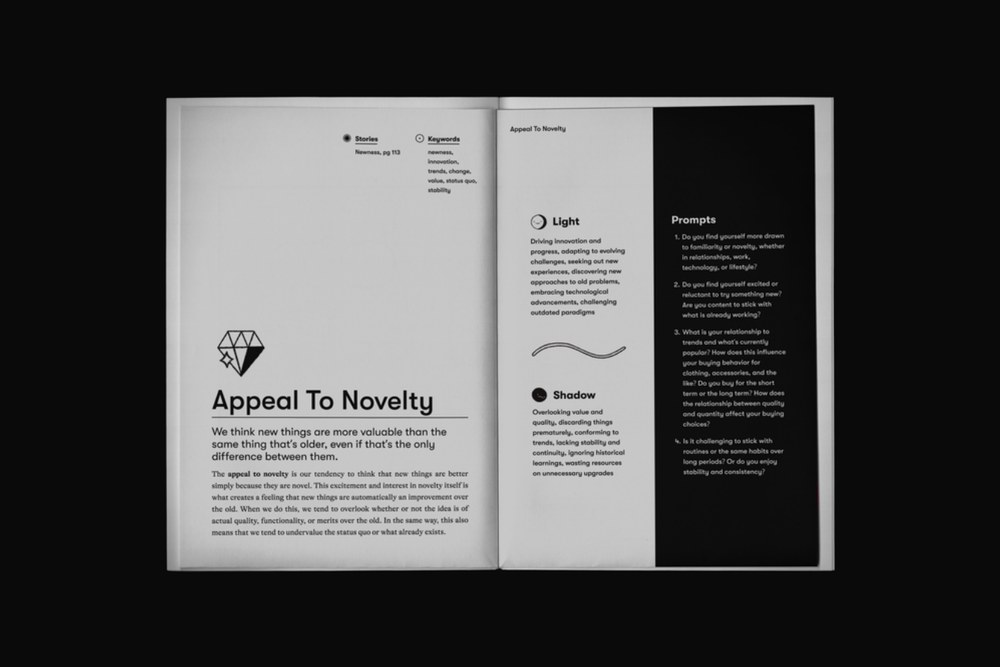
Book spread: the Appeal to Novelty bias, with its light side, shadow side and prompts
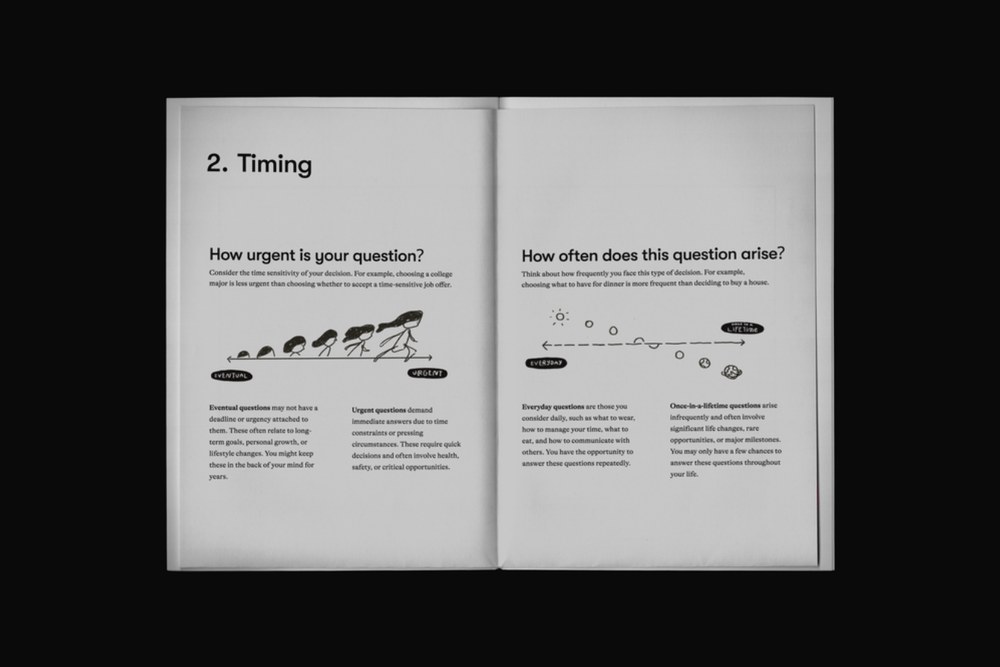
Book spread: Timing, how urgent is your question and how often does it come up
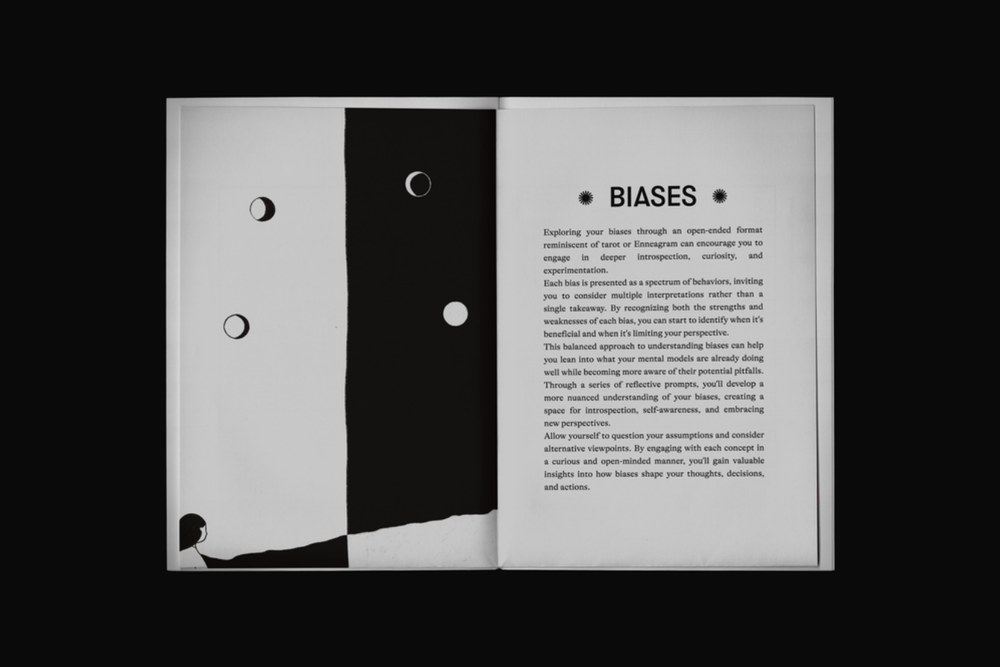
Book spread: the introduction to the Biases section

Item 1 of 8

An exploration into better decision making, grounded in the science of cognitive bias and the wisdom of storytelling

Ask This Book a Question arrives like a trusted friend, one who knows that decision making is less about unlocking secrets and more about understanding the quiet ways we navigate uncertainty.

Through a series of visual prompts, the book maps the invisible geography of our minds – from our perception of time to our tendency to remember the bizarre over the familiar to the shortcuts we take when avoiding difficult truths.

This book is a companion for anyone who has ever felt stuck under the weight of too many choices, offering a thoughtful way to sit with uncertainty and navigate life’s most pressing questions.

“Everyone should read this magical book! Viewing our questions—from trivial to challenging—through the prism of Vicki’s delightfully wise stories creates a constellation of insights that will change the way you navigate your inner world.”

— Buster Benson, author of
Why Are We Yelling?

“In an age of content overload, we need better questions. Vicki Tan’s excellent Ask This Book a Question poses just the right ones”

— Yancey Strickler, author and cofounder of Metalabel, Kickstarter, and The Creative Independent

“In Ask This Book a Question, Vicki Tan turns decision-making into an interactive, self-reflective journey. This guide will help you navigate life’s uncertainties with clarity and curiosity.”

— Nir Eyal, author of
Hooked and Indistractable

Why did a designer write a book about decision-making?

Because no matter who we are, we all struggle to make choices that truly align with who we want to be. I've redesigned how we think about cognitive biases – not as flaws to fix, but as powerful tools for making more intentional, self-aware decisions.

get yours today 〰️ get yours today 〰️ get yours today 〰️ get yours today 〰️ get yours today 〰️ get yours today 〰️

Hardcover from Penguin Random House in the US, paperback from Profile Books in the UK, and translated into Portuguese and Simplified Chinese.

Who’s it for?

Anyone standing at a crossroads, or circling the same question for the hundredth time, about a job, a move, a relationship, or something quieter that hasn’t quite turned into a question yet. You bring the question, and the book takes you down a few rabbit holes to help you find your answer, a little like shaking a magic 8 ball and getting a better question back, which is also why people keep giving it to each other.

What’s inside

110 questions, 19 illustrated stories and 38 cognitive biases, laid out like a choose-your-own-adventure. You start with something you’ve been mulling over and follow it through its topic, its timing, what’s in the way and how it makes you feel, until it leads you to the stories and biases that fit. Each bias has a light side and a shadow side, since the same mental shortcut that leads you astray one day can sharpen your judgment the next, along with a few prompts for when you get stuck. Every page is drawn by hand, wobbly lines and all, which turned out to be exactly what the book wanted to look like.

[ 6 of the 110 questions inside ]

What’s been on your mind lately?

Pick the question closest to yours, and see where the book would send you.

The book sends you toPage 194

Denomination effect

We spend small amounts freely and hesitate over big ones, even when they add up to the same thing.

Something to sit with

Where are small amounts of your time or money quietly adding up?

Follow this question further

About the book

Who would you give it to?

The friend in the middle of a big decision, the new grad wondering what’s next, someone thinking about a new job or a new city, or anyone who tends to overthink things (you know who you are). It’s meant to stay within reach, something to pull back off the shelf whenever a new question shows up.

Do I have to read it in order?

Nope, you move around it however your question takes you, forwards and back, from section to section. The biases in the back work on their own too, if you’d rather just wander.

Is it a self-help book?

Kind of, the way talking to a wise old friend is. It’s grounded in behavioral science and cognitive bias, and it helps you understand why your question is your question at all, so you can find an answer that’s actually yours.

Where can I get it?

In hardcover and ebook from Penguin Random House in the US, and in paperback from Profile Books in the UK, with translations in Portuguese and Simplified Chinese.

Is it a good gift for someone who doesn’t read much?

Probably more than most books, since it isn’t meant to be read cover to cover. They can open it to the one question on their mind, follow it for a few pages, and put it back on the shelf until the next one comes along.

Is there a card deck?

Yes! A tiny companion card deck is on its way in April 2027.

Giving it this holiday season?

If someone in your life is heading into the new year with a big choice in front of them, or a question they keep quietly coming back to, this is a good one to wrap. They don’t have to read it cover to cover, they can open it to their own question on the first night and keep it close for the next one.

About Vicki

Vicki Tan is a digital product designer based in San Francisco, currently a design principal at Loom, and before that at Pinterest, Spotify, Headspace, Lyft and Google, where she blended behavioral science with design to help people build healthier habits and find inspiration. She studied behavioral science at UC San Diego and did research in pediatric oncology at Stanford and pulmonology at UCSF. When she isn’t designing or writing, she can usually be found walking her Great Pyrenees, Charlie, reading sci-fi, or hunting down the best noodle spots in the city.

Got a question of your own?

Think of something you’ve been mulling over, then start with one of the questions people bring to the book, like “Should I quit my job?”, or wander through the biases that might be shaping your answer.